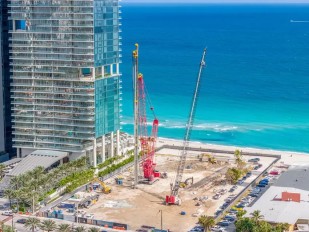
$16bn Hudson Tunnel project launches first TBM beneath the Palisades

Tunnel boring is set to begin on the Hudson Tunnel Project, the cornerstone of the wider Gateway Program connecting New Jersey and New York. The milestone marks the start of excavation for the first new rail tunnel beneath the Hudson River in more than a century.
The first of two tunnel boring machines will shortly begin excavating beneath the Palisades Cliffs in New Jersey, followed by a second machine working on the parallel tunnel. Together, they will drive approximately 5,100 ft from the North Bergen portal to the Hudson County Access Shaft in Weehawken.

The breakthrough will form the first section of the new two-tube rail tunnel that will eventually continue beneath the Hudson River toward Manhattan. Once complete, the new crossing will operate alongside the existing North River Tunnel, which has been in continuous service since 1910.
The first two TBMs have been purpose-built for the hard rock conditions beneath the Palisades.
Each machine weighs more than 1,680 tons and carries a cutterhead measuring 28 ft 8 in in diameter. The complete machine, including its trailing gantry, extends for roughly 500 ft.
Disc cutters mounted on the rotating cutterhead will press into the rock face and break it into chips. Excavated material will then be collected behind the cutterhead and transported through the machine using conveyor systems.
As the TBM advances, precast concrete segments will be installed to create the permanent tunnel lining. Hydraulic thrust jacks will react against the completed lining to push the machine forward for the next excavation cycle.
Progress is expected to average around 30 ft per day, including scheduled maintenance periods. At that rate, the machines are expected to reach the Hudson County Access Shaft around one year after launch.
The geology will change significantly beyond that point. The first pair of TBMs will be removed at the shaft and replaced by another two machines designed specifically for the mixed ground conditions beneath the Hudson River.
Although the start of tunnelling is a major milestone, reaching this stage has required almost three years of enabling works.
Since late 2023, crews have constructed a new bridge carrying Tonnelle Avenue, excavated the TBM launch box and created the space required beneath the highway for the machines and their trailing equipment.
The TBMs were manufactured in parallel with those works. Each machine contains close to 100 major components and required more than a year to manufacture. After factory testing, they were dismantled, transported to New Jersey and reassembled on site.
The Palisades drive is only the first major underground phase. Once the second pair of machines takes over, tunnelling will continue through the more variable conditions below the Hudson River before reaching Manhattan.
The launch therefore signals a clear shift in the project. Much of the preparation has taken place in shafts, portals and temporary works. Now the main underground excavation begins.

Sources: tunnelsandtunnelling.com, rtands.com, constructiondive.com, governor.ny.gov
Want to read more like this story?

Hudson Tunnel Project gets green light for construction
Dec, 01, 2021 | NewsThe Hudson Tunnel Project looks to have finally broken through the last barrier leading to construc...

TBM launch shaft works advance for Poland’s high-speed rail tunnel
Sep, 04, 2026 | NewsPreparation for Poland’s high-speed rail tunnel beneath Lodz has reached an important stage, with th...

3 major East Coast tunnel, the Hudson Tunnel, the Howard Street Tunnel and the Chesapeake Bay Bridge Tunnel, projects move forward
Jan, 11, 2022 | NewsThree major tunnel projects that connect key transportation arteries on the East Coast are advancin...
India’s largest rail TBM begins tunnelling beneath Mumbai
Jul, 06, 2026 | NewsIndia’s Mumbai-Ahmedabad high-speed rail project has reached a major underground construction milest...
Second giant TBM begins work on India’s first undersea rail tunnel
Jul, 19, 2026 | NewsA second large-diameter tunnel boring machine has started excavation on the Mumbai-Ahmedabad High-Sp...
Advanced mixshield TBM tackles chalk and flint beneath the Thames
May, 13, 2026 | NewsConstruction has begun on a major sub-river power tunnel beneath the River Thames as part of Nationa...

Amtrak executive chief warns about storm Sandy damaged tunnels in the Hudson river
Jun, 03, 2014 | NewsTwo major rail tunnels connecting New York and New Jersey are becoming a burning issue for politicia...

HS2 launches final giant TBM “Karen” for Euston Tunnel as High-Speed Rail enters final boring phase
Mar, 16, 2026 | NewsHS2 has reached a major tunnelling milestone with the launch of its final tunnel boring machine (TB...

8 new U.S. tunnels under way: fascinating and challenging
Jan, 10, 2014 | NewsWhether you live in the U.S. or not you will find the following tunnels that are currently being bui...
On This Day
September 30th 2002
READ MORE
Related Video

Trending

Unstable Ground: Lessons from the I-80 New Jersey Sinkhole Saga

Seequent announced extended gINT support until Dec 31, 2028
New Release: GeoStudio 2025.2

Artificial Ground Freezing: Applications, Techniques, and Key Considerations
Nepal’s Himalayan settlements face escalating flood and landslide threats