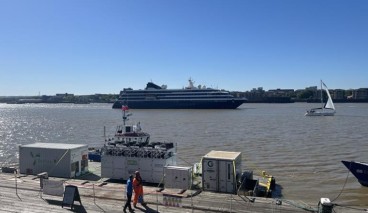
$750M state funding advances San Francisco downtown rail extension

San Francisco's planned downtown rail extension has secured $750 million in new state funding, advancing a major underground connection that will bring Caltrain and future California high-speed rail services directly into the Salesforce Transit Center.
Known as The Portal or the Downtown Rail Extension, the project will create a new rail connection from the existing Caltrain terminus at Fourth and King streets into the heart of downtown San Francisco. Led by the Transbay Joint Powers Authority (TJPA), the scheme includes underground and surface railway works, a new underground station at Fourth and Townsend streets and fit-out of the below-ground rail station already constructed beneath the Salesforce Transit Center, which was built with a rail level but is currently served only by buses.
Announced on 10 November through California's Transit and Intercity Rail Capital Program, the funding comprises a $100 million award for critical preconstruction activities, part of almost $1.2 billion distributed across 19 projects in this cycle, together with a further $650 million committed through a multi-year funding agreement supporting construction. The state contribution is intended to help leverage approximately $3.38 billion already committed through the Federal Transit Administration's Capital Investment Grants programme, although the award carries a contingency relating to future federal funding under the FTA's New Starts programme.
The overall project extends for approximately 3.54 km. Around 1.05 km of the alignment is currently planned as mined tunnel beneath portions of Townsend and Second streets, while other underground structures will be constructed using cut-and-cover methods.
TJPA's preliminary design identifies sequential excavation as a feasible method for the mined section. Two access shafts and associated adits would provide access to the underground works, with the tunnel principally carrying two tracks before widening to three approaching the Salesforce Transit Center.
The underground works also include ventilation structures, utility relocations and the new Fourth and Townsend station. At the Salesforce Transit Center, the existing train box will be completed to accommodate six tracks and three centre platforms.
Constructing the extension through dense downtown San Francisco will require significant coordination with existing buildings, utilities, streets and transport infrastructure. The combination of mined and cut-and-cover construction allows the alignment to respond to different urban constraints along the route rather than relying on a single tunnelling method throughout.
The main 40-CT civil and tunnel package is being procured through progressive design-build, with a scope covering the mined tunnel, cut-and-cover structures, ventilation structures, the Fourth and Townsend Street station and fit-out, and associated utility works. TJPA's 10 November project update shows preconstruction contract approval and award activities extending into spring 2027, with design proposed to begin that year and construction readiness targeted for 2029.
The authority's October status report puts the updated project cost estimate at approximately $7.57 billion, against a retained project budget of around $8.26 billion.
Once complete, the extension will provide direct access to downtown San Francisco for Caltrain passengers and eventually California High-Speed Rail services. It will also create connections with eight transit operators, including nearby BART services at Embarcadero.
Readiness for passenger service is currently forecast for December 2036, with approximately 90,000 passengers per day expected to use the completed connection.
The latest funding therefore represents a significant step in moving the project from planning and procurement towards detailed design and construction of one of San Francisco's most important future underground transport links.
Sources: tunnelsandtunnelling.com, tunnellingjournal.com, trains.com
Want to read more like this story?

New crustal stress map of North America
Apr, 23, 2020 | NewsA new study presents the first quantitative stress magnitude map that also includes horizontal stre...

Using Terzaghi’s Equation in Foundation Design
Nov, 25, 2022 | NewsTheoretical models to predict the capacity of helical piles are based on Soil Mechanics and an appr...

Parameters Variation: Model Customization and Sensitivity Analyses
Sep, 15, 2021 | NewsA well-known engineering challenge in the framework of finite element (FE) analysis-based design is...

Repair of massive 50-meter sinkhole in Bangkok enters new challenge after structural breach
Sep, 26, 2025 | NewsIn the early hours of September 26, emergency efforts to stabilize the massive sinkhole in front of...
UK geothermal projects expand from Cornwall power to Birmingham heating
Apr, 16, 2026 | NewsThe United Kingdom is advancing geothermal energy development through a combination of deep geotherm...
Seven Frequently Asked Questions about Helical Piles
Apr, 29, 2026 | NewsHelical piles are a proven deep foundation solution used across commercial, industrial, utility, and...

Block caving: A new mining method arises
Jul, 25, 2018 | NewsBlock caving is a new alternative method of developing new mines or extending the operation of open...

Categories of isolated foundation footings
Jun, 25, 2019 | NewsThe foundation of a building is constructed in order to transfer the superstructure's load to the g...
Maharashtra's longest road tunnel to be completed soon
Oct, 17, 2022 | NewsMaharashtra's longest road tunnel between Igatpuri and Kasara is nearing completion. It is built as...
On This Day
November 16th 1979
READ MORE
Related Video

Trending

How does the Leaning Tower of Pisa survive earthquakes

Tiebacks vs. soil nails: Choosing the right earth retention solution
When Dams Fail: The Growing Crisis of Tailings Management
Mexico City’s sinking crisis mapped by next-generation satellite
Landslide in Northern Peru Forces Evacuation of Over 170 Residents
Asbestos remains a deadly infrastructure risk across the UK
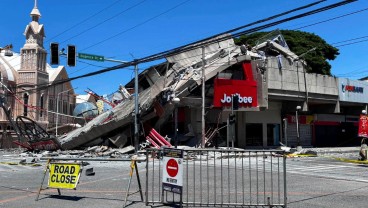
Major earthquake in southern Philippines causes deaths and widespread damage