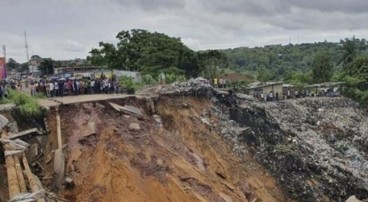
China’s TBM rescue beneath the Yangtze
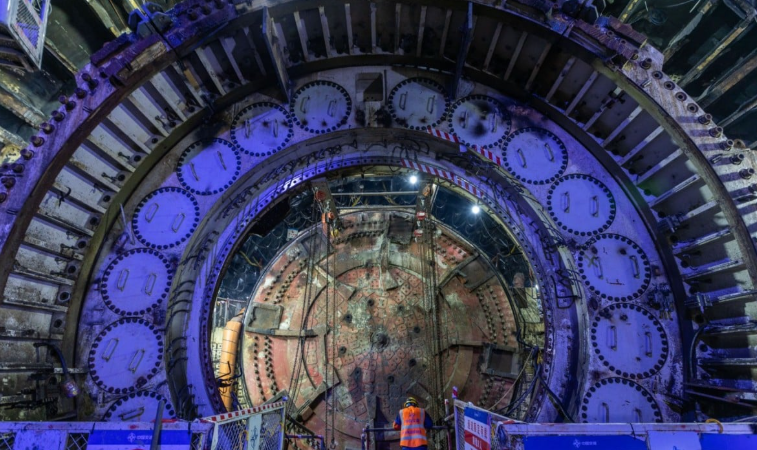
During construction of the Jiangyin–Jingjiang Yangtze River Tunnel, a 6.4 km road tunnel beneath the Yangtze River, a 16 m diameter tunnel boring machine (TBM) suffered a catastrophic failure approximately 54 m below ground level. At that depth, the machine was subjected to high hydrostatic pressure and water-saturated soft sediments, making reversal, dismantling, or in-situ repair technically unfeasible. Abandoning the TBM would have resulted in a direct financial loss estimated at USD 50 million, alongside major schedule delays and potential cancellation of the project. Conventional contingency options offered little practical value under such constrained geotechnical and hydraulic conditions.
Faced with limited options, engineers pursued an unconventional solution: launching a second TBM from the opposite riverbank to intercept the disabled machine underground. This approach required exceptional control of alignment and ground behaviour beneath a major river. Predicting deformation, managing face stability, and maintaining trajectory over several kilometres demanded continuous monitoring and high-precision guidance systems. The operation culminated in a mid-tunnel docking with a vertical alignment error of just 2 mm and negligible horizontal deviation, achieved under high water pressure and weak ground conditions. Such accuracy is rarely attained in long-distance tunnelling and represents one of the most demanding operations in underground construction.
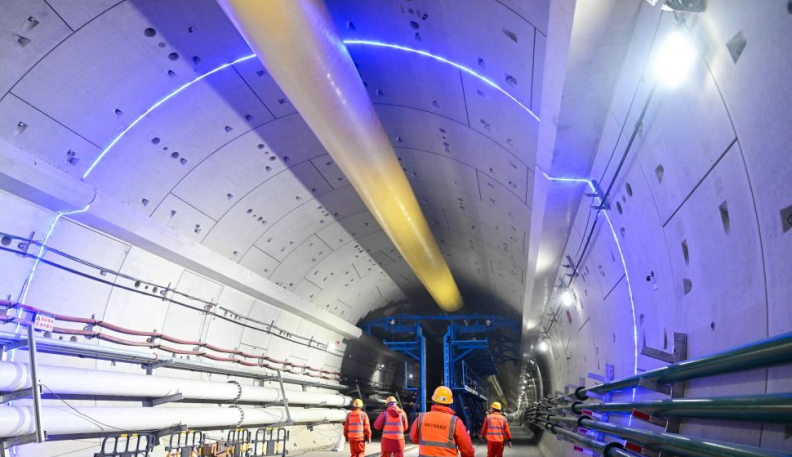
The successful docking enabled safe access to the failed TBM and allowed the tunnel drive to continue, effectively salvaging the project. Beyond the immediate recovery, the operation demonstrated that deep underground rescue beneath rivers is technically viable. It highlights the maturity of modern TBM guidance, ground prediction, and risk management systems, particularly in challenging geotechnical environments. Lessons from this intervention are directly applicable to future sub-river, sub-sea, and fault-crossing tunnels, where equipment failure has traditionally been considered terminal.

Sources: english.news.cn, timesofindia.indiatimes.com, scmp.com, interestingengineering.com, shanghai.gov.cn
Want to read more like this story?

Yangtze River high-speed rail tunnel completed after record underwater TBM drive
Apr, 07, 2026 | NewsChina has reached a major tunnelling milestone with the completion of the underwater section of the...
India’s largest rail TBM begins tunnelling beneath Mumbai
Jul, 06, 2026 | NewsIndia’s Mumbai-Ahmedabad high-speed rail project has reached a major underground construction milest...
Advanced mixshield TBM tackles chalk and flint beneath the Thames
May, 13, 2026 | NewsConstruction has begun on a major sub-river power tunnel beneath the River Thames as part of Nationa...

HS2 launches final giant TBM “Karen” for Euston Tunnel as High-Speed Rail enters final boring phase
Mar, 16, 2026 | NewsHS2 has reached a major tunnelling milestone with the launch of its final tunnel boring machine (TB...
Second giant TBM begins work on India’s first undersea rail tunnel
Jul, 19, 2026 | NewsA second large-diameter tunnel boring machine has started excavation on the Mumbai-Ahmedabad High-Sp...

8 new U.S. tunnels under way: fascinating and challenging
Jan, 10, 2014 | NewsWhether you live in the U.S. or not you will find the following tunnels that are currently being bui...

Tunnel Series 2: Full-scale TBM Tunnel Construction Showcase in PLAXIS 3D
May, 22, 2023 | EventMechanized tunneling method has been widely adopted in underground tunneling projects to help suppo...

Bentley Webinar | Modeling With Tunnel Designer in PLAXIS 2D & 3D
Mar, 21, 2023 | EventTunnels are created to make it easier to navigate through challenging topographical and geological...
Engineering Through Rock and Faults: Geotechnical Challenges of the Daliangshan Highway Tunnel
Oct, 19, 2024 | NewsIn an ambitious endeavor, engineers in Sichuan Province, China, are breaking new ground—literally a...
On This Day
August 6th 2010
READ MORE
Related Video

Trending

Unstable Ground: Lessons from the I-80 New Jersey Sinkhole Saga

Seequent announced extended gINT support until Dec 31, 2028

New Release: GeoStudio 2025.2

Artificial Ground Freezing: Applications, Techniques, and Key Considerations

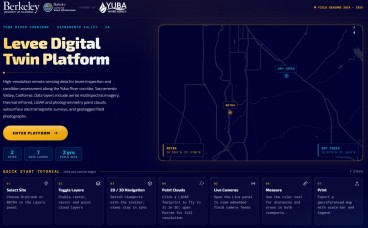
Levee Digital Twin Platform Launches for California's Yuba River Corridor