All-Alaskan Gas Pipeline (AAGP): a mega-project to boost America's energy market
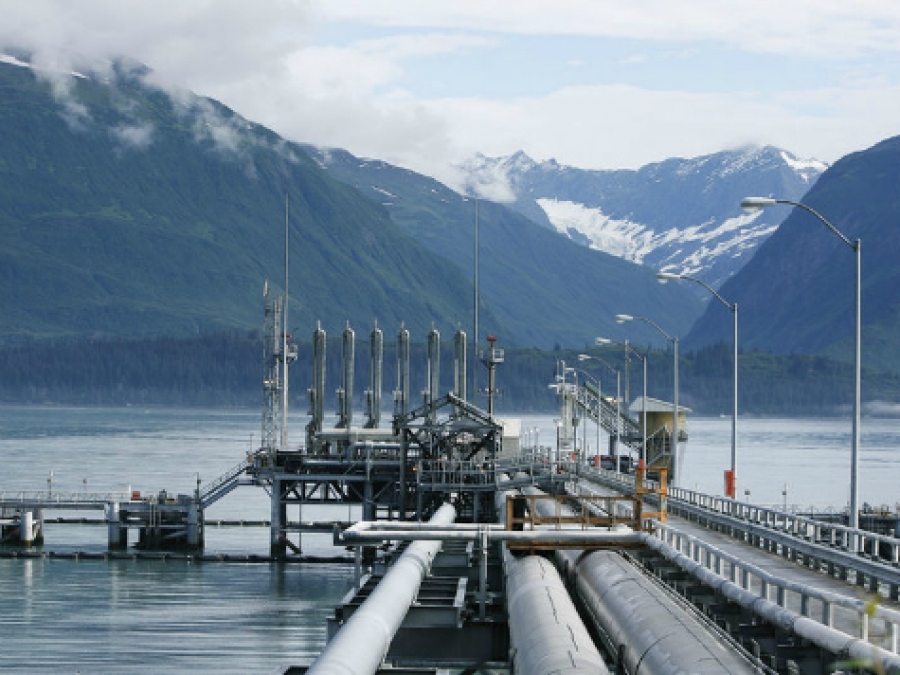
The $50 billion All-Alaskan Gas Pipeline project is going to transport natural gas from the North Slope down to the Kenai Peninsula, south of Anchorage. The project will include apart from the pipeline, the construction of harbors, roads, and state-of-the-art facilities to convert gas into liquid natural gas (LNG) for shipping to the Asian markets and the south. AAGP will have tremendously positive economic impacts on Alaskan citizens and cut America's trade deficit by up to $24 billion a year.
Over the last decades, transfer of energy supplies over large distances through pipelines has proven to be the safest, most efficient, and ecologically friendly means. In Alaska, the oil pipeline has served its purpose, transferring more than 16 billions of barrels, for more than 35 years, despite wildfires and earthquake activity. The same is going to happen now, with the new 800 mile long natural gas pipeline expecting to gain State Legislature's approval in the following months. Upon approval, planning and start of construction are expected by 2018.
The area of North Slope with its four oil fields, Prudhoe Bay, Point Thomson, Lisburne, and Kuparak, is estimated to include at least 35.4 trillion cubic feet of extractable natural gas. Given the lack of gas pipelines across the state, the U.S. Energy Information Administration estimates that the above fields could supply up to 4 billion cubic feet of natural gas per day, reducing today's cost for local residents of Fairbanks from $24 per thousand cubic feet (mcf), down to an average cost of $1.12 mcf, for at least 24 years. Also, according to the Alaska Department of Labor Workforce Development, during the six year construction period, over 6,500 related job positions will be created and 50,000 permanent jobs will be economically stimulated. Also, operation of the pipeline will raise state's gross domestic -product (GDP) by 25% and eliminate unemployment, while new state and local taxes will rise from $3 billion in Year 1, to $5 billion in Year 5, to $24 billion by Year 30.
With the new pipeline, gas will be piped, converted to liquid gas (LNG) and shipped to Asian markets at a gross cost of $4.72 mcf, plus the cost of building the pipeline. The final number is going to be at least competitive compared to current prices of $10 mcf in Europe, $12 mcf in China and $17 mcf in Japan, making the United States the leading supplier of oil and gas combined in the following years, overtaking Russia and Saudi Arabia.
Sources: AmericanThinker, Forbes
Want to read more like this story?

Natural gas pipeline upsets Michigan residents
Jul, 17, 2014 | NewsA mega-project natural gas pipeline, proposed to pass through Michigan heading to Ontario, upsets Mi...

$7.85 billion Mountain Valley Pipeline completed and given green light to go into service
Jun, 10, 2024 | NewsMountain Valley Pipeline, LLC, sent a letter to the U.S. Federal Energy Regulatory Commission on Mo...

Texan ADCC natural gas pipeline goes into service
Jul, 01, 2024 | NewsIt was recently announced that the ADCC pipeline went into service on July 1st in Texas. Furthermo...

Meet Pipeline Screw Anchors for stabilization of oil, gas, and other pipelines
Jul, 05, 2017 | NewsPipeline Screw Anchors provide an excellent answer for stabilization of oil, gas, and other pipeline...
Global energy pressures accelerate LNG Canada phase 2 and pipeline expansion plans
Mar, 27, 2026 | NewsRising geopolitical tensions and disruptions in global energy supply chains are increasing interest...

55 Kilometres to Net Zero: Inside the Viking Pipeline Project
May, 04, 2025 | NewsA new chapter in the UK’s low-carbon journey begins with the approval of a £200 million underground...
TAPI: a pipeline initiative that moves on
Sep, 03, 2014 | NewsThis past summer, a step forward was taken for the realization of the Trans-Afghan natural gas pipel...

Pipeline leaks 210,000 gallons of oil in South Dakota, USA
Nov, 18, 2017 | NewsA total of 210,000 gallons of oil leaked from the Keystone Pipeline in South Dakota, USA, on Thursda...
Long-Haul, China's oil pipeline successfully adapted for carbon dioxide transport
Feb, 10, 2026 | NewsChina has completed a 27km trial transporting carbon dioxide through a repurposed long-haul oil pip...
On This Day
August 7th 1927
READ MORE
Related Video

Trending

Brownfield success: Engineering excellence starts below ground


Scripting Comes to RS3: Automate, Customize, and Accelerate Your 3D Modelling

2D and 3D Analysis of Retaining Systems

Mine waste dam failure in Myanmar caught on video
Stop Guessing, Start Designing: Introducing Support Designer in Slide2

Development program prepares new engineers for success