Behavior of Square-Round Shaft Combination Helical Piles and Anchors Sponsored

Historically, most helical anchors and piles have been fabricated with helices attached to either a solid square or open pipe central shaft (Square-Shaft (SS) or Round-Shaft (RS)). This is generally how most manufacturers around the world have supplied these elements although in some cases a tubular square shaft or solid round bar are also used for small anchors.
Square Shaft vs. Round (Pipe) Shaft Helical Piles
Square shafts are more frequently used for tension loading while round shafts are more commonly used for compression loading. For the same helix configuration, a square-shaft anchor or pile requires less installation torque than a comparable round-shaft anchor or pile and typically gives a somewhat lower axial load capacity.
In some soils, a round-shaft helical anchor or pile may “spin-out” during installation as a large portion of the installation energy is engaged in overcoming the shaft resistance developed between the helical plates and above the top helix. This can occur even if a large crowd force is used during installation. In some geologic profiles, such as stiff glacial clays, marls or highly weathered argillaceous bedrock, initial advance of a square-shaft section is typically more successful that a round-shaft lead section.
Here is a generalized overview of the difference between these two shaft types:
| Square Shaft | Round (Pipe) Shaft |
| More frequently used for tension loading | More commonly used for compression loading |
| Requires less installation torque | Generally requires more installation torque |
| Typically gives a somewhat lower axial load capacity | Typically higher axial load capacity |
| Highest torque correlation factor (Kt) | May "spin out" during installation |
| Better penetration in dense soil | Less likely to buckle in soft soils |
| Generally lower cost per kip |
Combining the Best of Both Piles
Each pile type has its advantages - with the installation advantages of the square shaft and the axial capacity and stiffness advantages of the round shaft - so the idea of combining their advantages was born and cleverly named the Chance "Combo Pile."
A Combo pile consists of:
- a traditional square-shaft (SS) lead section that could have 1, 2 or 3 helices;
- a transition fixture (square-to-round shaft); and
- round-shaft (RS) extensions which could have additional helices or could be just a plain round shaft.
Once the square-shaft lead section advances, the round-shaft section can usually advance without difficulty, aided by the rotation of the lead section. The combination of a square-shaft lead helical section with one or more following round-shaft sections can give some advantages over either a square-shaft or round-shaft anchor or pile on its own. The transition from a square-shaft lead section to round-shaft extension sections is possible using a unique cast fixture manufactured by Chance Civil Construction creating a combination or Combo pile, Figure 1.
Commonly, Combo Piles for many applications consist of an SS150 (1.5 in. x 1.5 in. solid square bar) lead to RS2875 (2-7/8 in. hollow pipe) extension or SS175 (1.75 in. x 1.75 in.) lead to RS3500 extension, although other combinations are available as shown in Table 1.
| Square Shaft Lead | Round Shaft Extension | Transition Coupler |
| SS5 or SS150 | RS2875 | C1500896 |
| SS175 | RS2875 | C1501365 |
| SS175 | RS3500 | C1500895 |
| SS200 | RS3500 | C1500937 |
| SS200 | RS4500 | C1101443 |
| SS225 | RS4500 | C1101418 |

Lessons on Installation Torque from Load Testing
Let’s take a look at some results of some full-scale field tests on Combo piles in comparison to traditional SS and RS piles.
Tests were performed at two sites in western Massachusetts:
- at Site-1 the soils consisted of stiff clay overlying soft clay;
- at Site-2 the soils consisted of medium dense silty sand overlying stiff clay.
Three different piles were tested at each site. The same helix configuration, three helices with 8-, 10-, and 12-inch diameters, was used on all three lead sections:
- Square Shaft pile - 1-1/2" solid square shaft lead section (SS5) with 3 helices of 8", 10" and 12" diameters followed by plain SS5 extension sections
- Round Shaft pile - 2-7/8" hollow round shaft lead section (RS2875) with 3 helices of 8", 10" and 12" diameters followed by plain RS2875 extension sections
- Combo piles - 1-1/2" solid square shaft lead section (SS5) with 3 helices of 8", 10" and 12" diameters followed by a C1500896 transition coupler and transitioned to plain RS2875 extension sections.
In the upper stiff clay, RS torque is highest because of the higher torque developed in the round lead section. In the lower soft clay, there is little difference in all three sections because the undrained shear strength is so low. It should be no surprise that the installation torque of the round-shaft sections is higher than comparable square-shaft sections with the same configuration of helices. Throughout the profile at this site, the SS and Combo piles have nearly the same installation torque. For square-shaft anchors and piles, most of the installation energy is engaged in advancing the helical plates.

Figure 3 shows a comparison between the measured installation torque of an SS, RS and Combo pile with the same helix configuration installed in a medium dense sand overlying stiff clay. In this case there is considerable difference in installation torque between the three piles throughout the upper sand (down to about 15 ft. where the clay is encountered) and then the three piles show similar torque.

Axial capacity of Combo piles generally falls in between that of square-shaft and round-shaft piles, as one might expect, although based on a large number of tests at several different sites, there is no consistent trend. Torque-to-Capacity (KT) factors for Combo piles are actually similar to default values for comparable size round-shafts recommended by AC358. Data from full-scale field testing of Combo piles/anchors in both clay and sand show that the axial load capacity of Combo piles/anchors is generally greater than square-shaft piles/anchors but slightly less than round-shaft piles/anchors.
Axial Load Capacity - Massachusetts Sites
Table 2 gives a summary of test results from the two Massachusetts sites. In general, the axial capacity of Combo piles falls in between SS and RS which is expected. Higher axial capacity from the RS anchors is consistent with higher installation torques shown in Figures 2 and 3. It may also be of interest to note that the displacement at 50% of the ultimate axial capacity (i.e., Q10/2 ; F.S. = 2) is very low, all less than ½ in. This is one of the advantages of using helical anchors and piles; small displacement at working load.
| Site | Soil | Anchor | Ultimate Capacity (lbs.) | Δ @ Q10/2 (in.) | KT (ft-1) |
| Site-1 | Stiff Clay-10' | SS5 | 22,250 | 0.34 | 10.0 |
| RS2875 | 27,300 | 0.22 | 9.3 | ||
| Combo | 20,400 | 0.26 | 8.5 | ||
| Soft Clay-20' | SS5 | 7800 | 0.36 | 14.1 | |
| RS2875 | 8700 | 0.22 | 10.4 | ||
| Combo | 9000 | 0.25 | 14.2 | ||
| Soft Clay-30' | SS5 | 7300 | 0.38 | 14.0 | |
| RS2875 | 9200 | 0.33 | 14.5 | ||
| Combo | 9100 | 0.32 | 17.1 | ||
| Site-2 | Silty Sand-10' | SS5 | 17,500 | 0.45 | 9.4 |
| RS2875 | 29,000 | 0.41 | 8.7 | ||
| Combo | 29,500 | 0.35 | 9.7 | ||
| Stiff Clay-20' | SS5 | 7450 | 0.42 | 10.2 | |
| RS2875 | 10,000 | 0.28 | 11.1 | ||
| Combo | 9600 | 0.33 | 12.0 |
Axial Load Capacity - Colorado Sites
Results from a number of additional full-scale field tests where both tension and compression tests were performed are available from two sites in Colorado and are summarized in Table 3. At Site-1 the soils consisted of very stiff clay at Site-2 the soils consisted on medium dense sand. These results represent only about 20% of the total number of tests performed, but provide a general view of the overall results. In this case, the Combo piles consisted of a lead SS175 section followed by an RS3500 extension section. At these two sites, both tension and compression tests were performed. Tests also included single-helix and double-helix configurations.
| Site | Soil | Anchor | Ultimate Tension Capacity (lbs.) | Ultimate Compression Capacity (lbs.) |
| Site-1 | Very Stiff Clay | SS175-14 | 28,100 | 23,800 |
| RS3500-14 | 48,300 | 75,000 | ||
| Combo | 34,100 | 56,100 | ||
| SS175-10/12 | 27,500 | 67,500 | ||
| RS3500-10/12 | 55,000 | 85,000 | ||
| Combo | 47,400 | 65,000 | ||
| Site-2 | Sand | SS175-8 | 6000 | 19,600 |
| RS3500-8 | 21,200 | 27,300 | ||
| Combo | 18,400 | 23,500 | ||
| SS175-10/12 | 15,500 | 31,500 | ||
| RS3500-10/12 | 41,200 | 46,100 | ||
| Combo | 45,200 | 41,200 |
Conclusions on Axial Load Capacity by Pile Type
Careful evaluation of these tests shows that:
- In nearly every case, axial capacity in compression is higher than axial capacity in tension, and in some case by as much as a factor of 2.
- In almost every case, for both tension and compression, the axial capacity of the Combo anchors/piles falls in between SS and RS anchors/piles. This is consistent with the results presented in Table 2 for the Massachusetts sites.
- The increase in axial capacity of a Combo anchor or pile over an SS anchor/pile is the result of being able to install the Combo pile and the RS extension section following the installation of the lead SS section.
- The difference in axial capacity between a single-helix and double-helix anchor or pile is approximately proportional to the ratio of cross-sectional area of the helices.
- It's also interesting to note that the displacement at a Factor-of-Safety of 2 (Q10/2) of all these tests is less than 0.50 in. and averages about 0.33 in.
Summary
Recent field test results show that in cases where the stratigraphy may not readily allow the installation of a round-shaft helical anchor or pile or the installation may be difficult, a Combo anchor or pile consisting of an SS lead helical section followed by RS extension sections can overcome this issue. Axial load capacity of Combo anchors and piles falls in between capacity of SS and RS anchors and piles with the same helix geometry.
Round-shaft extension sections used in combination with square-shaft lead sections generally give increased stability against lateral buckling under compression loading or when the shaft extends above the ground surface. If additional bucking resistance is needed, the round-shaft section could be filled with grout. Additionally, the pipe shaft extensions give higher lateral capacity as compared to a square-shaft section which can be very important in cases where the shaft extends above ground, for example when used as ground-mount solar systems.
Want to read more like this story?

New crustal stress map of North America
Apr, 23, 2020 | NewsA new study presents the first quantitative stress magnitude map that also includes horizontal stre...

Using Terzaghi’s Equation in Foundation Design
Nov, 25, 2022 | NewsTheoretical models to predict the capacity of helical piles are based on Soil Mechanics and an appr...

Parameters Variation: Model Customization and Sensitivity Analyses
Sep, 15, 2021 | NewsA well-known engineering challenge in the framework of finite element (FE) analysis-based design is...

Repair of massive 50-meter sinkhole in Bangkok enters new challenge after structural breach
Sep, 26, 2025 | NewsIn the early hours of September 26, emergency efforts to stabilize the massive sinkhole in front of...
UK geothermal projects expand from Cornwall power to Birmingham heating
Apr, 16, 2026 | NewsThe United Kingdom is advancing geothermal energy development through a combination of deep geotherm...
Seven Frequently Asked Questions about Helical Piles
Apr, 29, 2026 | NewsHelical piles are a proven deep foundation solution used across commercial, industrial, utility, and...

Block caving: A new mining method arises
Jul, 25, 2018 | NewsBlock caving is a new alternative method of developing new mines or extending the operation of open...

Categories of isolated foundation footings
Jun, 25, 2019 | NewsThe foundation of a building is constructed in order to transfer the superstructure's load to the g...
Maharashtra's longest road tunnel to be completed soon
Oct, 17, 2022 | NewsMaharashtra's longest road tunnel between Igatpuri and Kasara is nearing completion. It is built as...
Form
Looking for more information? Fill in the form and we will contact CHANCE Foundation Solutions for you.
On This Day
October 23rd 1996
READ MORE
Related Video

Trending
Fulgurite: A rare phenomenon

Life after gINT - Rethinking geotechnical data management for a new era

Is Africa gradually splitting into two sections?
Stop Guessing, Start Designing: Introducing Support Designer in Slide2
Asbestos remains a deadly infrastructure risk across the UK
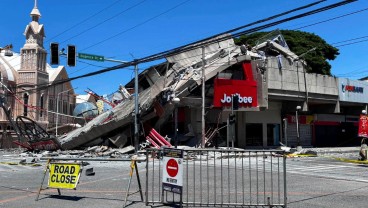
Major earthquake in southern Philippines causes deaths and widespread damage