Carnian Pluvial Episode: That time when it rained for 1-2 million years

The Carnian Pluvial Episode (CPE) was an event on earth that took place at some point between 232 and 234 million years ago, when the earth’s climate changed radically.
During that time, the earth’s surface was still divided into the Pangea and the Panthalassa, where all the continents were joined together, forming one massive supercontinent surrounded by one vast ocean.
The Pangea was surrounded by mountains and consequently, all its central area was under a long dry spell, and some rainfall was present only at its edges near the vast ocean.
At some point in the 1970s, geologists Schlager and Schollnberger were investigating Austria’s Northern Limestone Alps when they discovered a layer of dark grey siliciclastic rock, which indicated very wet conditions within the era’s dry carbonate rock layer.
Following this discovery, the same layer was later uncovered by geologists in England, Israel, Italy and the U.S.A., solidifying the base for the occurrence of the Carnian Pluvial Episode.
During the CPE, the earth was receiving very frequent intervals of very heavy, continuous rain.
The main theory for the causes of CPE is that a series of very powerful volcanic eruptions took place in the Wrangellia Terrane, today’s Alaska and British Columbia, which filled the atmosphere with massive amounts of carbon dioxide.
It is worth noting that another theory exists, supporting that the emergence of a new mountain range, the Cimmerian orogen, created a strong pressure gradient between the ocean and the continent, creating a monsoon phenomenon deep withinin the Pangea. However, the volcanic eruption theory is believed to be more plausible.
In their turn, the massive amounts of carbon dioxide that were released into the atmosphere would have contributed to a global warming phenomenon.
Namely, it is believed that the planet’s average temperature before CPE was already 10 °C higher than today and was further raised by 3-4 °C due to the volcanic activity, while a change in the ocean’s salinity might also have taken place.
The Carnian Pluvial Episode was the cause for mass extinction of species inhabiting the earth at the time and played a major role in reshaping the environment for the next couple of millions of years.
Sources: www.wionews.com, www.earth.com, explorersweb.com, en.wikipedia.org, www.pbslearningmedia.org, www.sciencedirect.com, en.wikipedia.org
Media
Want to read more like this story?
New study suggests volcanoes triggered biggest mass extinction ever
May, 28, 2019 | NewsAccording to new data, volcanoes are responsible for the biggest mass extinction on Earth. The "Gr...
A review of the Mount St. Helens massive Eruption: The largest landslide ever recorded
May, 18, 1980 | NewsIn 1980, the explosion of Mount St. Helens in the state of Washington, United States, triggered the...

A sandstone fragment reveals valid information over climate change
Apr, 28, 2021 | NewsA cobble of green sandstone discovered near Antarctica has revealed crucial information regarding t...
Earth and Moon struck by asteroid shower 800 million years ago
Jul, 21, 2020 | NewsAccording to a new study, a vast meteoroid bombardment struck the Earth and the Moon about 800 mill...
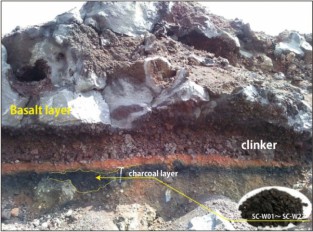
Korean scientists define the last eruption date of an active volcano in the country
Jul, 28, 2014 | NewsJeju, Korea, a universally famous vacation spot with natural resources attracting many tourists, has...
Increased seismic hazard due to Earth's rotation slowdown
Jun, 28, 2018 | NewsScientists from the U.S. believe that a significant increase of earthquakes will occur beginning fro...

Monitoring the temperature of oceans via Seismic Ocean Thermometry
Oct, 18, 2020 | NewsScientists from the California Institute of Technology (Caltech), U.S. and the Chinese Academy of S...
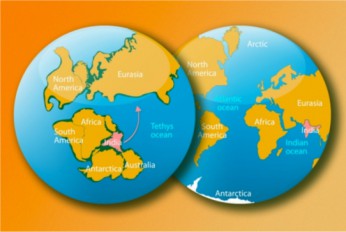
The Birth of The Himalayas
May, 27, 2015 | NewsFive weeks after the terrible earthquake in Nepal which literally shook the Himalayas, researchers f...

Massive earthquake hits Alaska: Tsunami warning issued
Jul, 22, 2020 | NewsA massive M 7.8 earthquake that hit off the coast of Alaska, forced authorities to issue a tsunami...
On This Day
August 6th 1932
READ MORE
Related Video

Trending

Seequent announced extended gINT support until Dec 31, 2028

New Release: GeoStudio 2025.2


Artificial Ground Freezing: Applications, Techniques, and Key Considerations

Brownfield success: Engineering excellence starts below ground

Emergency ground stabilisation protects rail works near Salford Central