Why Builders Are Turning to Helical Piles for Residential Construction Sponsored

In today's residential and multifamily construction market, builders face increasing pressure to control costs, accelerate schedules, and build on sites that would have been considered unbuildable just a few decades ago. As housing demand pushes development into areas with difficult soil conditions, many builders are discovering that helical piles provide a cost-effective alternative to traditional foundation systems.
Helical piles are frequently used where challenging soil conditions exist, including:
- soft clays
- silts
- high groundwater
- expansive soils
- collapsible soils
- deep fills
- organic deposits
- sinkhole-prone areas
- seismic regions
Versatility and installation efficiency have made helical piles an increasingly attractive solution for both single-family and multifamily projects.
For most builders, the primary concern is not the type of foundation being installed - it is total installed cost. While the initial foundation price is important, experienced builders understand that the true cost of a foundation includes:
- site preparation
- installation time
- testing requirements
- equipment mobilization
- excavation
- schedule impacts
- potential construction delays
One of the most compelling benefits of helical piles is their ability to reduce total installed foundation costs. Compared to many other foundation types, helical piles typically require less site preparation and smaller installation equipment. Because they are screwed into the ground rather than drilled or driven, installation is often faster and more predictable.
Speed Advantages
Helical piles can generally support design loads immediately after installation, subject to the project engineer's requirements and any specified verification or load testing. Traditional concrete foundations often require curing time before structural loads can be applied and may involve quality-control procedures such as slump and cylinder testing. By avoiding concrete curing delays, helical piles can allow framing and other structural work to begin sooner. For production builders, apartment developers, and general contractors, days removed from the schedule can contribute to lower carrying costs and earlier project completion.

Site Advantages
Since helical pile installation generally requires little or no excavation, and because soil is not removed from the ground, there are typically no spoils to haul away or dispose of. This is particularly beneficial on tight urban sites.
For builders working in developed neighborhoods or on constrained lots, helical piles offer another significant benefit: installation in limited-access areas. Unlike many deep foundation systems that require large drilling rigs or pile-driving equipment, helical piles are often installed using compact equipment, such as a skid steer loader or mini-excavator, that can operate in restricted spaces. This makes them particularly attractive for infill construction, townhome developments, custom homes with limited setbacks, and multifamily projects where property lines, existing structures, or overhead obstructions limit access. Because of the installation method, vibration and noise will not affect neighboring people or structures.
The ability to build in difficult ground conditions is another reason builders choose helical piles. Many regions throughout North America contain soils that create challenges for traditional shallow foundations:
- Florida is known for sinkhole activity, high groundwater tables, and sandy soil.
- Texas and Colorado commonly experience expansive clay soils that shrink and swell with changes in moisture content.
- Portions of North Carolina and Georgia contain variable soils and deep fills that can require specialized foundation solutions.
- The Mid-Atlantic region, including the Washington D.C. and Potomac area, contains areas of soft and variable soils that may require deep foundation support.
Helical piles can often be advanced through these problematic soils to reach more suitable bearing strata, improving foundation performance and reducing settlement risk.

Sustainability Advantages
Builders are also increasingly focused on sustainability and environmental stewardship. Helical piles are often viewed as an environmentally friendly foundation alternative because they require minimal excavation, generate little waste, and can often be removed or repurposed if site conditions change. Environmentally sensitive properties, and sites with contaminated soils where soil handling or disposal is a concern can often be built on due to the lack of soil disturbance caused by helical piles. Reduced disturbance also minimizes disruption to neighboring structures and decreases the environmental footprint of construction activities.
Their ability to be installed during a wide range of weather conditions, including frozen ground, further contributes to construction flexibility and reduced schedule risk. In colder climates, helical piles are commonly used in frost-susceptible areas and have demonstrated excellent performance in frozen ground and permafrost applications.
Beyond building foundations, builders and developers are finding additional uses for helical pile technology. Helical pile foundations can support Level 2 electric vehicle charging stations, parking lot lighting, pedestrian lighting, signage, solar structures, and other site improvements. These applications allow developers to use a single foundation technology across multiple project components while maintaining the benefits of rapid installation and immediate loading.
Moving forward with construction projects
As residential and multifamily development continues to move onto more challenging sites, builders are increasingly evaluating foundation systems based on total installed cost rather than simply material cost. Helical piles offer a compelling combination of speed, efficiency, minimal site disruption, and reliable performance in difficult ground conditions. For builders seeking to reduce risk, accelerate schedules, and improve overall project economics, helical piles have become a foundation solution worth serious consideration.
Want to read more like this story?

New crustal stress map of North America
Apr, 23, 2020 | NewsA new study presents the first quantitative stress magnitude map that also includes horizontal stre...

Using Terzaghi’s Equation in Foundation Design
Nov, 25, 2022 | NewsTheoretical models to predict the capacity of helical piles are based on Soil Mechanics and an appr...

Parameters Variation: Model Customization and Sensitivity Analyses
Sep, 15, 2021 | NewsA well-known engineering challenge in the framework of finite element (FE) analysis-based design is...

Repair of massive 50-meter sinkhole in Bangkok enters new challenge after structural breach
Sep, 26, 2025 | NewsIn the early hours of September 26, emergency efforts to stabilize the massive sinkhole in front of...
UK geothermal projects expand from Cornwall power to Birmingham heating
Apr, 16, 2026 | NewsThe United Kingdom is advancing geothermal energy development through a combination of deep geotherm...
Seven Frequently Asked Questions about Helical Piles
Apr, 29, 2026 | NewsHelical piles are a proven deep foundation solution used across commercial, industrial, utility, and...

Block caving: A new mining method arises
Jul, 25, 2018 | NewsBlock caving is a new alternative method of developing new mines or extending the operation of open...

Categories of isolated foundation footings
Jun, 25, 2019 | NewsThe foundation of a building is constructed in order to transfer the superstructure's load to the g...
Maharashtra's longest road tunnel to be completed soon
Oct, 17, 2022 | NewsMaharashtra's longest road tunnel between Igatpuri and Kasara is nearing completion. It is built as...
Form
Looking for more information? Fill in the form and we will contact CHANCE Foundation Solutions for you.
On This Day
October 28th 2013
READ MORE
Related Video

Trending

Mine waste dam failure in Myanmar caught on video

Chesapeake Bay Bridge-Tunnel: An ‘engineering wonder’ of the modern world

What controls the height of the world's mountains?

AI-enhanced landslide model ready for 2026 deployment in Hong Kong
Asbestos remains a deadly infrastructure risk across the UK
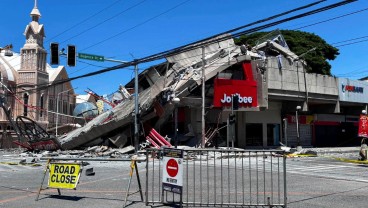
Major earthquake in southern Philippines causes deaths and widespread damage