Why geotechnical investigations define the success of pipejacking TBM projects
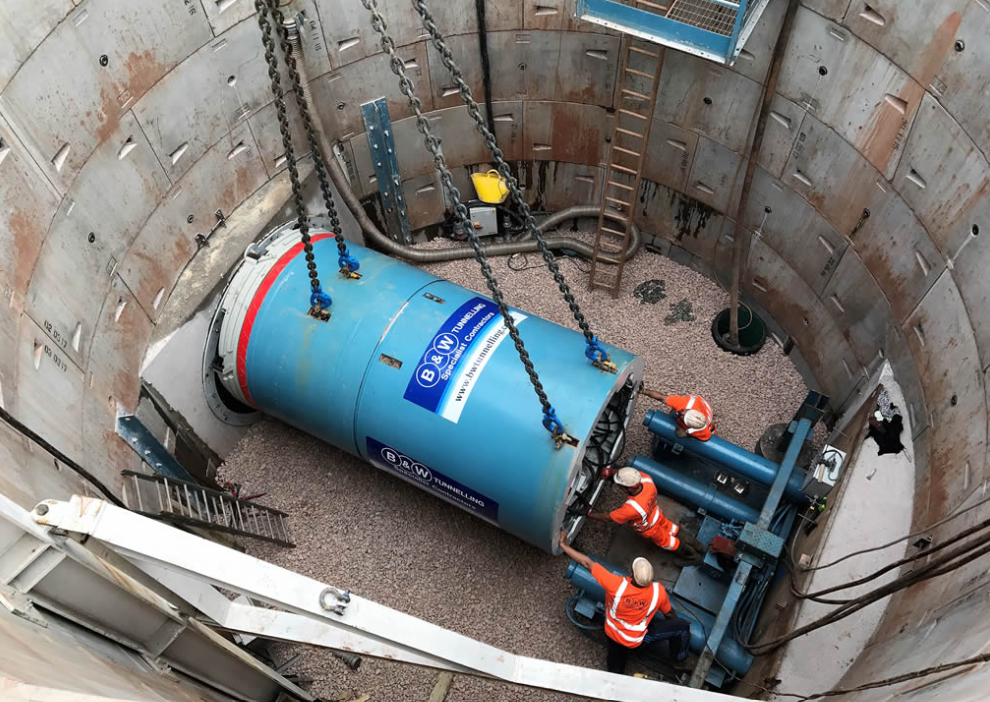
The expansion of renewable energy systems and the need to modernise urban infrastructure are driving a rapid increase in small-diameter tunnelling projects worldwide. These tunnels are widely used for sewage systems, stormwater management, freshwater supply, hydropower networks, and pipelines transporting gas or hydrogen. Many of these installations are constructed using pipejacking methods combined with slurry microtunnel boring machines (MTBMs).
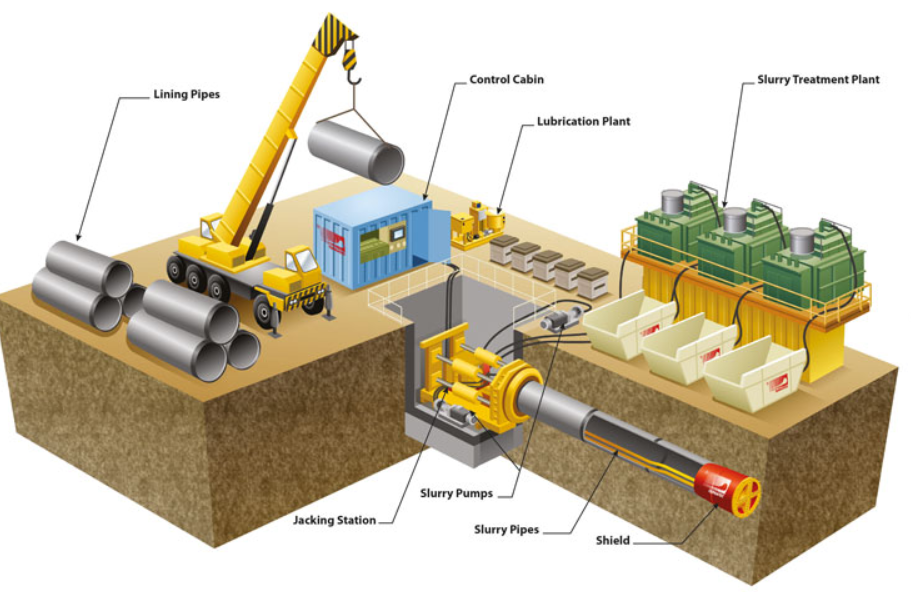
Pipejacking is particularly suitable for tunnels with internal diameters up to about 3.2 m, allowing construction without extensive surface disruption. However, despite the technological versatility of modern MTBMs, their performance and operational reliability depend heavily on the geotechnical conditions encountered along the tunnel alignment.
Ground variability, groundwater pressure and the mechanical behaviour of soils and rock masses influence critical design parameters such as cutterhead configuration, excavation tools, slurry transport systems and face support mechanisms. For this reason, detailed geotechnical investigations are essential during the early stages of project planning.
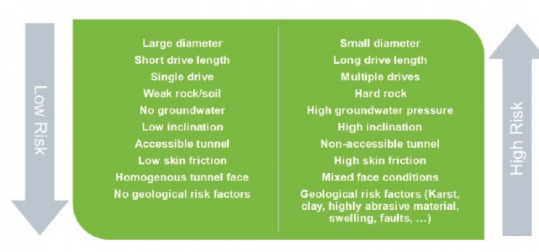
International standards, including Eurocode 7 and tunnelling guidelines such as ATV DIN 18319, emphasise that reliable ground investigation data reduces the risk of unexpected ground behaviour and improves construction safety and efficiency. Comprehensive geological analysis allows engineers to adapt machine technology to the ground conditions rather than relying on standardised designs.
Key Geotechnical Parameters for Pipejacking Design
Pipejacking tunnels frequently pass through mixed geological profiles, where soft soils, weathered rock and hard rock formations may occur along the same alignment. To understand these conditions, engineers focus on specific geotechnical parameters that influence TBM design and tunnelling performance.
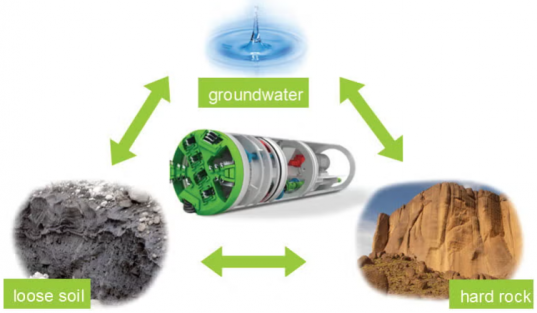
In soft soils such as sand, gravel, silt and clay, four parameters are particularly important:
-
Grain size distribution, determined through sieve and sedimentation tests
-
Hydraulic conductivity (permeability), which influences groundwater behaviour
-
Plasticity, evaluated using Atterberg limits to assess clogging potential
-
Soil strength or density, often measured using Standard Penetration Tests (SPT)
For hard rock conditions, additional parameters must be evaluated:
-
Degree of weathering, indicating rock decomposition
-
Rock Quality Designation (RQD), describing rock mass integrity
-
Compressive and tensile strength, obtained through laboratory testing
-
Abrasiveness, measured using the Cerchar Abrasivity Index (CAI)
These parameters allow engineers to estimate TBM performance, predict tool wear and determine the appropriate cutterhead configuration. Accurate geotechnical profiling is particularly important in small-diameter tunnels, where access to replace worn tools may be limited or impossible during excavation.
Case Studies in Hard Rock and Cohesive Soil
Two projects demonstrate how detailed geotechnical investigations can guide machine design and tunnelling strategy under demanding geological conditions.
In British Columbia, Canada, the Jacko Lake microtunnel formed part of the Trans Mountain Expansion Project. The tunnel served as a casing for an oil pipeline and encountered extremely hard and abrasive rock formations, including basalt and gabbro with compressive strengths exceeding 250 MPa.
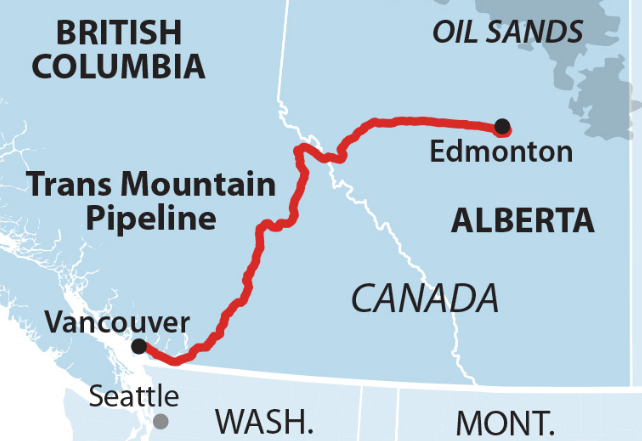
To address these conditions, engineers deployed Herrenknecht AVN2000 pipejacking machines equipped with specialised cutterheads, reinforced bearings and anti-roll systems capable of maintaining high thrust forces. Despite complex geology including fault zones and mixed ground conditions, the project successfully completed a 1,173 m microtunnel, one of the longest pipejacking drives of its type in Canada.
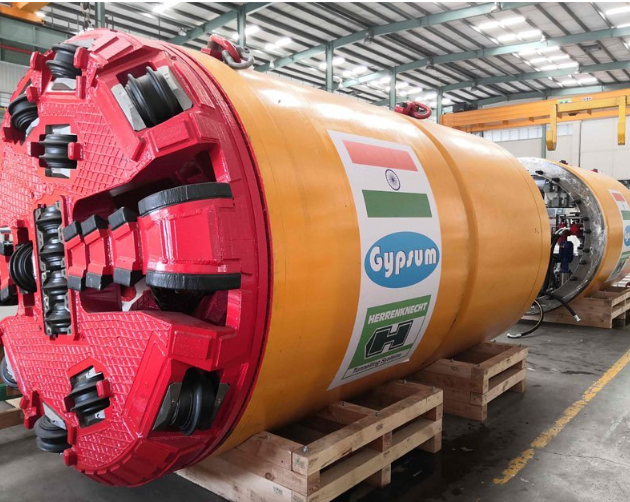
A different challenge emerged in southeast Paris, where a 1.8 m diameter rainwater tunnel was constructed to improve stormwater management before the 2024 Olympic Games. The alignment passed through swelling clay formations known as Argiles Vertes, which can cause clogging and shield jamming.
To mitigate these risks, engineers increased the machine overcut, installed cutterheads designed to minimise clay adhesion and incorporated additional flushing nozzles to remove sticky material. These design adaptations allowed tunnelling to proceed efficiently while maintaining ground stability in a densely built urban environment.
Concluding Remarks
Pipejacking projects around the world demonstrate that geotechnical investigations are fundamental to successful tunnel construction. Accurate understanding of subsurface conditions enables engineers to customise TBM technology, reduce operational risks and maintain consistent excavation performance.
As underground infrastructure continues to expand to support energy transition and urban resilience, integrating detailed geotechnical data with tailored machine design will remain essential for reliable and safe pipejacking operations.
Sources: tunnelsandtunnelling.com, tunnel.ita-aites.org, mdpi.com, canada.ca
Want to read more like this story?

Rocscience | Geotechnical Software for Tunnelling
Jun, 24, 2022 | NewsTunnelling is a specialized civil engineering discipline for designing and constructing underground...

Bentley Webinar | Modeling With Tunnel Designer in PLAXIS 2D & 3D
Mar, 21, 2023 | EventTunnels are created to make it easier to navigate through challenging topographical and geological...
Izmir Metro Tunnel: How Geological Factors Can Impact Your Tunnel Construction
Nov, 14, 2022 | NewsThe population of the world has grown rapidly, and advanced infrastructure like metro tunnels has b...
Engineering Through Rock and Faults: Geotechnical Challenges of the Daliangshan Highway Tunnel
Oct, 19, 2024 | NewsIn an ambitious endeavor, engineers in Sichuan Province, China, are breaking new ground—literally a...

Tunneling
Apr, 24, 2020 | EducationA tunnel is an underground structure which is constructed through the surrounding mass of soil or...
Advanced mixshield TBM tackles chalk and flint beneath the Thames
May, 13, 2026 | NewsConstruction has begun on a major sub-river power tunnel beneath the River Thames as part of Nationa...
India’s largest rail TBM begins tunnelling beneath Mumbai
Jul, 06, 2026 | NewsIndia’s Mumbai-Ahmedabad high-speed rail project has reached a major underground construction milest...
Tunneling in Rock
Apr, 21, 2020 | EducationTunnels in rock-masses are usually constructed by the bored tunnel technique. Both the conventiona...

Yangtze River high-speed rail tunnel completed after record underwater TBM drive
Apr, 07, 2026 | NewsChina has reached a major tunnelling milestone with the completion of the underwater section of the...
On This Day
August 6th 1918
READ MORE
Related Video

Trending

Life after gINT - Rethinking geotechnical data management for a new era

Is Africa gradually splitting into two sections?
Stop Guessing, Start Designing: Introducing Support Designer in Slide2
Alert level is raised in Mexico as the Popocatépetl volcano spews ash and gas

Levee Digital Twin Platform Launches for California's Yuba River Corridor