GeoStudio Sets the Surcharge: Centrifuge Testing of Earthquake Swarm Effects on Dam Foundations Sponsored

Earthquake swarms, clusters of moderate-to-strong seismic events occurring in quick succession, are a growing concern for large dams, whose foundations can suffer cumulative stiffness degradation and progressively rising pore water pressure with each successive shock. A research team from Zhejiang University's College of Civil Engineering and Architecture and its Center for Hypergravity Experimental and Interdisciplinary Research designed a centrifuge testing program to find out exactly how a layered clayey sand foundation responds when repeated aftershocks follow a mainshock, and how the presence of a large dam changes that response.
To make the physical model faithfully represent a real gate dam sitting on the foundation, the team needed the centrifuge model to reproduce the same contact stress distribution the actual dam would impose on its foundation soil. Rather than guess at an equivalent surcharge, the researchers used GeoStudio to compute the foundation contact pressure of the prototype gate dam directly. That calculation showed the dam imposes roughly 375.3 kPa under its centerline and 1189.7 kPa under its edge, numbers the team then used to size a rectangular steel block (400 × 310 × 106.5 mm) placed on top of the centrifuge model's foundation layer, ensuring the stress state inside the small-scale model genuinely matched the stress state beneath the full-size dam.

With that surcharge block calibrated by the GeoStudio analysis, the team built two 50g centrifuge models, one with the steel block in place, one without, instrumented with accelerometers, pore-pressure transducers, and laser displacement sensors at multiple depths within both the upper and lower soil layers. After a lengthy consolidation phase under centrifugal acceleration, the models were subjected to a sequence of scaled earthquake records: a 0.3g mainshock followed by two successive aftershocks, reproducing the kind of clustered seismicity the study set out to investigate.
The results show that the un-surcharged "free ground" model liquefied readily, accompanied by significant soil dilation. At the same time, consecutive strong-motion events drove a continuous accumulation and escalation of excess pore pressure within the lower clayey layer. Interestingly, the surcharge block representing the dam's weight appeared to suppress pore pressure accumulation during shaking and speed up dissipation afterward, but consecutive seismic events still accelerated the generation of peak excess pore pressure in the foundation overall. Because the surcharge itself was sized using a GeoStudio stress analysis, the researchers can be confident that these observed suppression and acceleration effects reflect the actual loading condition beneath a real dam, rather than an arbitrary approximation, giving the findings direct relevance to seismic design guidance for dam foundations in earthquake-swarm-prone regions.
Source: Centrifuge modelling on seismic response of layered clayey sand ground during earthquake swarms
Want to read more like this story?

Dam Engineering
Apr, 10, 2020 | EducationA dam is an infrastructure system that consists of several structures with the intent to collect,...
EACD-3D-96
Oct, 10, 2013 | Software
Bentley Webinar Series: Numerical Analysis of Seepage and Stability of a Tailings Dam (Real-life Projects with PLAXIS)
Oct, 21, 2021 | EventJoin Bentley Systems to the second Real-life Projects with PLAXIS webinar series to learn more abou...
EAGD-SLIDE
Oct, 10, 2013 | Software
Satellite data indicate over 2,500 U.S. dams are in poor condition
Dec, 21, 2025 | NewsDams across the United States are aging and underfunded, with geoscientists reporting that over 2,5...

Savings in removing over repairing dams
Jul, 09, 2018 | NewsDam removal has become a mainstream option for dam safety management restoring river, coastal ecosys...
Aging dam infrastructure: A severe future threat
Jan, 22, 2021 | NewsAccording to a new report, issued by the United Nations University, aging water storage facilities...

How Do Dams Trigger Earthquakes?
May, 25, 2015 | NewsAccording to scientists, earthquakes are triggered by dams, since there are many cases giving eviden...
May 31st is National Dam Safety Awareness Day in America
May, 31, 2016 | NewsOn the May 31st we commemorate the significant role dams play in American life. From providing nearl...
Form
Looking for more information? Fill in the form and we will contact Seequent, The Bentley Subsurface Company for you.
On This Day
September 23rd 2013
READ MORE
Related Video

Trending

Is Africa gradually splitting into two sections?
Stop Guessing, Start Designing: Introducing Support Designer in Slide2
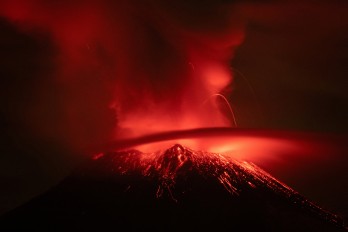
Alert level is raised in Mexico as the Popocatépetl volcano spews ash and gas

Embankment Collapse on NH-66 in Kooriyad Triggers Engineering and Oversight Review
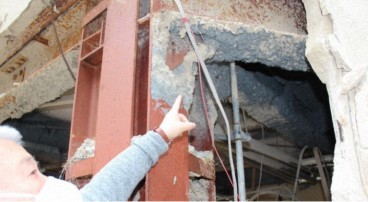
Asbestos remains a deadly infrastructure risk across the UK
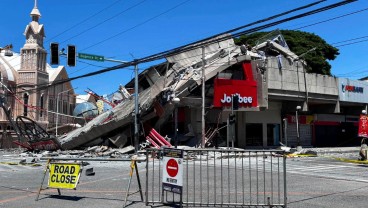
Major earthquake in southern Philippines causes deaths and widespread damage