Heavy equipment has entered parts of Big Bend National Park for soil assessment and design work linked to planned roads, vehicle barriers and detection infrastructure. Source: Construction Review
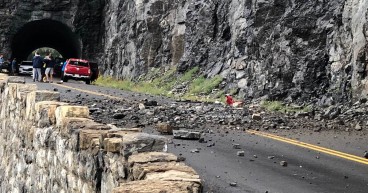
Heavy equipment has begun working inside Big Bend National Park in southwest Texas as federal crews assess ground conditions for a major border infrastructure programme. The work is linked to a USD1.72bn federal contract for the Big Bend 4 project, which includes low profile vehicle barriers, road improvements and detection technology along sections of the US Mexico border. Southwest Valley Constructors, a Kiewit Corp. subsidiary based in Albuquerque, received the fully obligated task order in May.
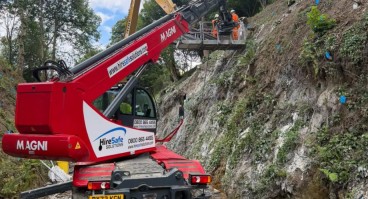
US Customs and Border Protection said on 7 August that the activity visible in the park is survey and design work, not the formal start of barrier construction. According to the agency, crews are clearing areas to assess soil conditions, excavation depths and base requirements for planned roads and barriers.
The planned scope for Big Bend 4 runs from near the Madera Canyon Campgrounds in Big Bend Ranch State Park, along the Rio Grande across much of the national park, to the Lower Canyons of the Rio Grande to the east. It includes about 17 miles of noncontinuous steel vehicle barriers at heights of roughly 4 ft to 6 ft, together with about 200 miles of new or improved patrol roads and related infrastructure including surveillance cameras, utility poles, and fibre optic and power cables. ENR reports the roads and detection element as around 205 miles, depending on location. The barriers are described as vehicle barriers rather than the 30 ft steel bollard walls planned elsewhere in the region, with the surrounding terrain treated as part of the natural barrier. Reported figures have varied between accounts, in part because CBP has revised its published project details on several occasions without formal announcement.
Big Bend National Park spans remote mountain, desert and river landscapes along the Rio Grande, where planned border infrastructure has raised environmental and access concerns. Source: ENR (image by USGS)
Big Bend National Park covers more than 1,250 square miles along the Rio Grande and contains remote desert, mountain, canyon and river environments. The park already includes more than 300 miles of roads, ranging from paved routes to primitive tracks.
The project has become contentious in part because, as opponents argue, even low profile infrastructure can have significant effects in a protected landscape. Road widening, drainage works, excavation, grading, foundation preparation and access improvements can disturb soils, alter runoff paths, fragment habitats and leave long term visual and environmental impacts.
CBP has said it does not plan to build a 30 ft wall or install stadium lighting through Big Bend National Park, Big Bend Ranch State Park or the Black Gap Wildlife Management Area. The agency says the work will focus on one new access road, existing road improvements, vehicle barriers in limited strategic locations and detection technology.
A federal spending website at one point listed the Big Bend 4 award as being for a border wall in Big Bend, Texas. CBP has repeatedly denied the contract is for a physical wall, though anti-wall campaigners remain sceptical that a wall in the national park has been ruled out.
Opponents argue that the practical footprint could still be significant. Local campaigners have raised concerns about road cuts, public land closures, lighting, river access, maintenance responsibilities and the effect on campgrounds, trails and backcountry routes. Conservation groups and local businesses have urged officials to prioritise technology rather than permanent physical infrastructure. Opposition has crossed party lines, drawing in local officials, business owners and state lawmakers.
The project is also drawing attention because both procurement and environmental requirements have been waived for border infrastructure work in the area. In October 2025, the Department of Homeland Security invoked Section 102(c) of the Illegal Immigration Reform and Immigrant Responsibility Act, waiving procurement laws for border contracting across Big Bend and eight other Border Patrol sectors; a June Government Accountability Office ruling on a contractor bid protest found that the waivers suspended competition requirements for individual task orders, including enhanced competition for orders above USD5m. A separate waiver action set aside requirements linked to environmental review, endangered species, clean water, historic preservation and National Park Service protections.
That changes the risk profile of the work. In normal infrastructure delivery, environmental assessment, cultural heritage review, hydrology, erosion control and ecological mitigation would shape design decisions before construction. When those processes are waived, more responsibility shifts to agency controls, contract requirements and field level decisions.
The first visible works are ground investigation and constructability checks. But in a place like Big Bend, groundworks are never only technical. Soil assessments, road design and barrier foundations must be considered alongside drainage, erosion, habitat connectivity, landscape sensitivity and cultural heritage.
Geoengineer.org uses third party cookies to improve our website and your experience when using it. To find out more about the cookies we use and how to delete them visit our Cookies page. Allow cookies