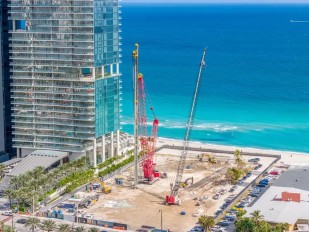
Shoring and ground movement under investigation after deadly Brooklyn collapse

Eight people, including two children and two construction workers, were killed and 18 others injured after a three-storey building collapsed beside an active excavation site in Brooklyn, New York, with investigators now focusing closely on the temporary support and excavation works next door.
The November 11 collapse occurred in the Flatbush neighbourhood while excavation was under way on an adjoining development site. The residential and commercial building, constructed in the 1930s, fell towards the excavation pit, trapping occupants and workers beneath a large mass of masonry, timber and structural debris.

More than 250 emergency personnel responded, with rescuers working through the night using hand tools, saws and later excavators to access deeper sections of the rubble. Rescue operations ended approximately 24 hours after the collapse once officials determined that no further victims remained trapped.
Attention has since shifted to determining why the structure failed.
Construction records indicate that excavation deeper than 4.5 m had been planned at the neighbouring site, together with rock blasting. Engineering drawings submitted for the project included systems intended to brace and retain the excavation perimeter.
Investigators have not yet established a definitive cause. However, specialists have identified excavation support as a central area of investigation because removing soil alongside an existing building can alter the lateral and vertical support conditions acting on its foundations.
Several possible mechanisms will need to be examined. These include whether the temporary shoring system had sufficient strength and stiffness, whether excavation caused ground movement beneath or adjacent to the existing foundations, whether construction vibration contributed to distress, and whether groundwater seepage affected soil stability.

Monitoring of the neighbouring structure is another important question. Witnesses reported seeing bricks falling shortly before the collapse, while some nearby residents had previously raised concerns about vibrations and cracking during construction.
The site also had a documented compliance history. Earlier in 2026, authorities issued a stop-work order during demolition after finding inadequate protection for neighbouring properties. Inspectors later found that work had resumed before the order was lifted, although construction was subsequently allowed to continue after the cited issues were reported as corrected.
Following the collapse, New York City ordered inspections at more than 160 other construction sites associated with entities connected to the project and commissioned an independent engineering review.
The investigation will ultimately need to establish whether the failure resulted from the excavation design, its execution, the condition of the existing building, inadequate monitoring, or a combination of factors.
In dense urban environments, deep excavation beside ageing structures leaves little tolerance for uncontrolled ground movement. The Brooklyn collapse demonstrates why excavation support, underpinning where required, structural monitoring and rapid response to cracking or movement are critical when construction takes place immediately beside occupied buildings.
Sources: thesafetymag.com, bbc.com, haitiantimes.com, nbcnewyork.com
Want to read more like this story?

Two killed after three-storey building collapses into neighbouring excavation in New York
Nov, 11, 2026 | NewsAt least two people have died and 17 others have been injured after a three-storey building collapse...

Two workers killed after soil collapse at water pipeline site in central Japan
Oct, 29, 2026 | NewsTwo construction workers have died after being buried by soil and debris during water pipeline works...
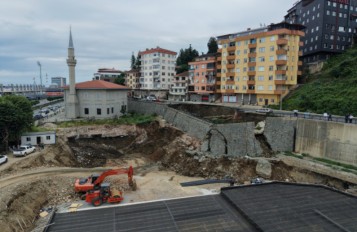
Road collapse in Rize shows the risk of unsupported excavation near urban buildings
Jul, 11, 2026 | NewsA road collapsed suddenly in Rize, Turkey, after ground movement developed beside an active building...

Response of Piled Buildings to the Construction of Deep Excavations
Apr, 16, 2014 | NewsIOS Press, a valued Geoengineer.org sponsor, published last year a book by Mandy Korff based on a re...

3D Finite Element Analysis of a Deep Excavation & Ground Response Evaluation
Jun, 13, 2022 | NewsSignificant ground movements due to deep surface excavations can seriously impact neighbouring infr...

Support of excavation and deep foundations for a multi-use building
Apr, 17, 2024 | NewsKeller designs and installs support of excavation and deep foundations for a multi-use building, wo...

Fatal excavation failure under investigation in Bushwick
Feb, 28, 2026 | NewsA trench collapse at a construction site in Bushwick, Brooklyn, left one worker dead and another cr...
Deep Excavations
Apr, 22, 2020 | EducationExcavation is a procedure that involves soil or/and rock removal in order to form a cavity and cre...

Rock mass collapse floods Tarbela hydropower work areas during tunnel excavation
Oct, 09, 2026 | NewsConstruction has been suspended at Pakistan's Tarbela Fifth Extension Hydropower Project after a wea...
On This Day
November 19th 1805
READ MORE
Related Video

Trending

Quick Clay Failure on Norway’s E6 at Levanger

Keller North America announces recent leadership changes


Fulgurite: A rare phenomenon
Nepal’s Himalayan settlements face escalating flood and landslide threats