Water contamination attributed to gas leaks from faulty wells
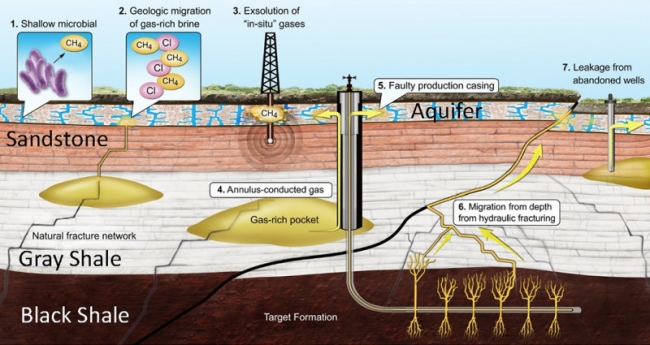
A recent study, published in the Proceedings of the National Academy of Sciences points out that drinking-water wells' contamination by natural gas, provided it is not naturally occurring, is attributed to human causes and particularly to poor lining of the wells drilled during hydraulic fracturing.
The research team led by Thomas Darrah, assistant professor of earth sciences at Ohio State, and composed of researchers at Duke, Stanford, Dartmouth, and the University of Rochester, focused on eight clusters of contaminated drinking-water wells in Pennsylvania and Texas. In their attempt to explain the source of contamination, they developed a method to trace how methane migrates under the earth. This pioneering method in geochemical forensics, indicated that neither horizontal drilling nor hydraulic fracturing of shale seems to be responsible for the natural gas contamination.
In hydraulic fracturing, shale is broken by pumping water underground at a depth far below the water table. Natural gas is carried upon the ground surface through long vertical pipes, lined with cement to prevent leakage of the natural gas. Scientific data suggested that poor casing and cementing of the wells is responsible for natural gas leaks into the examined aquifers. Robert Poreda, professor of geochemistry at the University of Rochester stated that "Many of the leaks probably occur when natural gas travels up the outside of the borehole, potentially even thousands of feet, and is released directly into drinking-water aquifers", while Avner Vengosh, professor of geochemistry and water quality at Duke supported that the team's results "appear to rule out the migration of methane up into drinking water aquifers from depth because of horizontal drilling or hydraulic fracturing, as some people feared".
To track the source of methane contamination, the developed method is based on the basic physics of the noble gases, such as helium and neon, which do not react with other chemicals, despite their mixing with methane and their parallel transportation. Hence, upon their underground release, noble gases can flow long distance without being affected by microbial activity or other chemical reactions. However their atomic mass may vary, hence determining how the change in ratios of noble gases as they are transported together with methane. Based on the above features of noble gases, researchers were able to track the source of the migrating methane, and distinguish it from the natural gas, which may naturally occur within drinking water aquifers.
The good news is that most of the issues associated with the contamination of underground water may be easily resolved provided that improvements in well integrity are planned and executed in the future. Especially since more and more countries start using the hydraulic fracturing technology, there is still room for improvements in the developed methodology, which seems to highlight the necessity for well integrity improvement.
Source: ScienceDaily.com
Want to read more like this story?
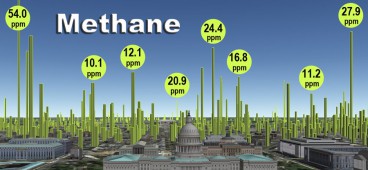
New study reveals natural gas pipeline leaks all over Washington, D.C.
Jan, 16, 2014 | NewsScientists from Duke University measuring methane levels, the main component of natural gas, produce...

A new water cleaning technology introduced in the oil and gas industry!
Jul, 10, 2014 | NewsAn emerging water cleaning technology is used in Midland Texas, to process heavily contaminated wate...

Water storage after fracking related to seismic hazard
Dec, 13, 2018 | NewsNew study shows that the storage of water produced from oil and gas exploitation using hydrauli...

Gregg Drilling & Testing Water Well Services
Sep, 07, 2016 | NewsWith over 30 years experience drilling in California and surrounding states, Gregg Drilling can hand...

Texas study shows gas injection a probable suspect of creating earthquakes
Nov, 04, 2013 | NewsThe goal of the study, published last Monday in the science journal Proceedings of the National Acad...
New method reduces radioactivity of hydraulic fracturing wastewater
Jan, 17, 2014 | NewsResearchers of Duke University found a way to recycle wastewater produced from hydraulic fracturing...

Scientists explain the bend in the Appalachian mountain chain!
Jul, 24, 2014 | NewsThe Appalachian mountains form a 1500 mile long almost straight chain running from Alabama to Newfou...

All-Alaskan Gas Pipeline (AAGP): a mega-project to boost America's energy market
Mar, 10, 2014 | NewsThe $50 billion All-Alaskan Gas Pipeline project is going to transport natural gas from th...

Video: Mysterious Huge Hole In Siberia Turned Into Lake
Jul, 20, 2015 | NewsHuge hole full of water appeared a few days ago in the Siberian region, which has caused much surpri...
On This Day
August 6th 1966
READ MORE
Related Video

Trending

Life after gINT - Rethinking geotechnical data management for a new era

Is Africa gradually splitting into two sections?
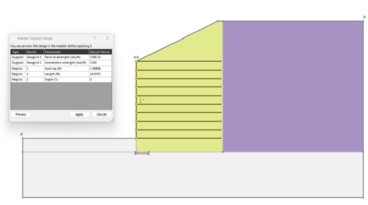
Stop Guessing, Start Designing: Introducing Support Designer in Slide2
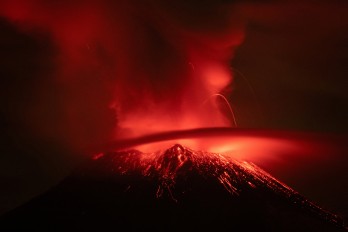
Alert level is raised in Mexico as the Popocatépetl volcano spews ash and gas
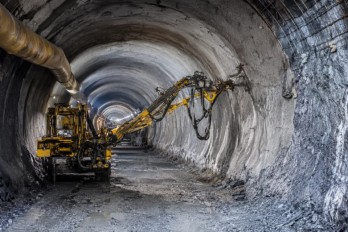
Major wastewater tunnel procurement begins in southern Sweden