
News
Featured News


News on Software

Ensuring Tailings Pond Stability With RS2
- Aug, 16, 2024
- Tailings Dams Slope Stability Slope Stability Analysis Rock Engineering Finite Element / Finite Difference Numerical & Constitutive Modeling Seepage Groundwater & Seepage Risk & Reliability News On Research / Academia News On Software
- Authored by: Geoengineer.org
Tailings ponds are critical components of mining operations and are engineered to contain the remnants of mined materials. As mines extract more resources, the volume of waste increases, and the pond...
Read More
GeoStudio 2024.2 New Release: Enhancing Geotechnical Analysis and User Experience
- Aug, 15, 2024
- Slope Stability Slope Stability Analysis Numerical & Constitutive Modeling Finite Element / Finite Difference News On Software
- Authored by: Geoengineer.org
This latest release provides important updates and new features for GeoStudio users conducting slope stability, seepage, and consolidation analysis, particularly for defining conditions within the un...
Read More
The Definitive Guide to Rocscience’s Geotechnical Software Integrations
Civil and mining engineers have always relied on innovative geotechnical solutions for their complex analyses. Using multiple programs can help provide the comprehensive insight needed, however, this...
Read More
RocTunnel3; Your New Software for 3D Underground Rock Stability Analysis and Design
Looking for a more intuitive way to model complex underground geometry? It’s about to get easier with RocTunnel3, Rocscience's revolutionary new 3D block stability analysis program designed specifi...
Read More
The PLAXIS Tunnel Engineer’s Toolbox: Everything You Will Need In One Place
- Jun, 28, 2024
- Tunneling Tunneling In Rock Numerical & Constitutive Modeling News On Software
- Authored by: Geoengineer.org
PLAXIS offers a wide range of tools to the Tunnel Engineer, which can be combined to generate almost any ground, tunnel, and reinforcement system geometry. Node-To-Node Anchors As their name indicat...
Read More
Rock Your Underground Construction With PLAXIS
- Jun, 24, 2024
- Tunneling Numerical & Constitutive Modeling Tunneling In Rock News On Software
- Authored by: Geoengineer.org
Underground construction is a complex endeavour. Leveraging rock masses as engineering materials requires overcoming many challenges. Any work needs to be carried out from within a heterogeneous,...
Read More
PLAXIS 3D – Traditional Tunnelling Method: Application Of MTM
This article aims, firstly, to enhance the current design approaches, via a new 2D approach based on a calibration with a 3D SSI model; secondly, to contribute for a more informed design when a 3D mo...
Read More
Using AI, RSLog’s New Optical Character Recognition (OCR) Feature Digitizes Paper Borehole Logs
The new groundbreaking Optical Character Recognition (OCR) feature in RSLog, Rocscience's cloud-based borehole data management software, offers the most cost-effective solution for handling large amo...
Read More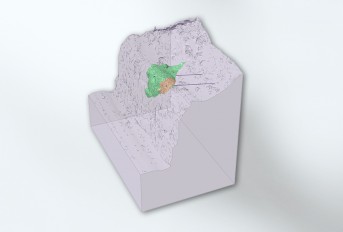
RocSlope3’s Latest Features: Joint Trimming, Bolt Application, Faster Computation, and More
Since RocSlope3’s release in June 2023, Rocscience created the following new features and improvements to make the program more useful: Fast and precise bolt application via .csv Joint trimming to r...
Read More
PLAXIS 2D – Traditional Tunnelling Method: Application Of MTM
The Traditional Method of Madrid is a method for tunnel construction that has been used for tunnelling in the Madrid Metro network since 1917 (Melis Maynar, M. 2012). The method uses a distinctive ex...
Read More